These days, the digital world is moving much faster than it was before and businesses in 2026 must keep up with this rapid pace of the digital world! Nowadays, customers want the business websites to be equipped with AI-powered capabilities, be fast, have a modern design, and, above all, be visually appealing. If your website doesn’t provide these features to the users, they won’t hesitate to go and visit other websites.
To stay ahead of the game, businesses must adapt their websites with the top website development trends in 2026. It’s not just about looks, an enhanced functionality, style, and design all combine to give your business a major boost and supports in business growth as well.
In this thorough guide, we will explore the top web development trends in 2026 that will help you create a modern yet high-performance optimized website. From AI-driven personalization to innovative homepage design, headless architecture, and interactive 3D features, we’ve got all the insights for you to create an updated website.
1. AI-Powered Websites
The primary factor that is completely changing the digital world’s landscape is none other than artificial intelligence. By transforming static pages into more dynamic ones, it has brought a great revolution in the digital world in 2026. Business websites have levelled up now. They now are like super smart systems that learn user patterns and hence provide the users a more personalized, engaging and real-time experience
AI is transforming modern website design through the following ways:
- Personalized product recommendations
- Automated content suggestions that actually feel relevant
- AI chatbots that are always there to help, 24/7
- Search bars that predict what you’re looking for with enhanced navigation
- Dynamic pricing for eCommerce that adjusts according to your needs
- AI-generated layouts and UI enhancements
AI nowadays has a huge impact on modern website design, as it can make fast, smart, and easy-to-use websites in just a couple of minutes. All online businesses should add AI-powered features to their websites these days.
2. Progressive Web Apps (PWAs)
Progressive Web Apps (PWAs) is a powerful technology that allows to create native apps which are fast and reliable. They offer plenty of features that include a smooth user experience, offline availability, and device installation. No wonder they are still popular among users, even in 2026.
Why PWAs are trending:
- Offline access
- Push notifications
- Instant loading with nearly zero delays
- App-like interface
- Lightweight performance
- Better user engagement
- Higher retention rate
These days, PWAs are largely preferred by businesses that want modern-looking websites since they offer the ideal balance of high performance speed, functionality, and user-friendliness. PWAs also give a huge advantage to businesses where internet speed varies a lot.
3. Headless CMS & API-First Architecture
Traditional CMS systems do not allow creativity, and such limitations in them are pushing companies toward headless CMS, where the backend and frontend work operate independently of one another.
Benefits of headless architecture:
- Faster load times
- Omnichannel content delivery
- Better scalability
- Highly customizable UI
- Cleaner development workflow
Headless CMS lets brands keep up with modern top website development trends and deliver modern and sleek websites without compromising functionality.
4. WebAssembly for High-Performance Web Apps
WebAssembly (Wasm) has greatly influenced the digital world. It is being used for applications that require heavy computational power. It helps code written in languages like C, C++, or Rust to run directly in the browser, that too in near-native speeds. For this reason, it’s been a total game-changer, revolutionizing the way we approach web development.
Where WebAssembly is used:
- Video editing tools
- 3D games
- Data analytics dashboards
- CAD and 3D modeling platforms
- AI-powered editing apps
- Real-time collaboration tools
In 2026, businesses prefer to develop modern website designs with advanced features such as
WebAssembly to create faster, even more feature-rich, and better-performing user experiences.
5. Serverless Architecture:
Serverless architecture is a cloud model that helps businesses focus on their core functions instead of handling the complicated server management issues. Rather, the cloud platforms manage everything from scaling to security and reliability.
Why serverless is booming:
- Lower cost
- No infrastructure management
- Fast deployment
- Auto-scaling
- High uptime
- Better security
Nowadays, startups and businesses selling SaaS products prefer to use the serverless architecture.
6. Low-Code/No-Code Development:
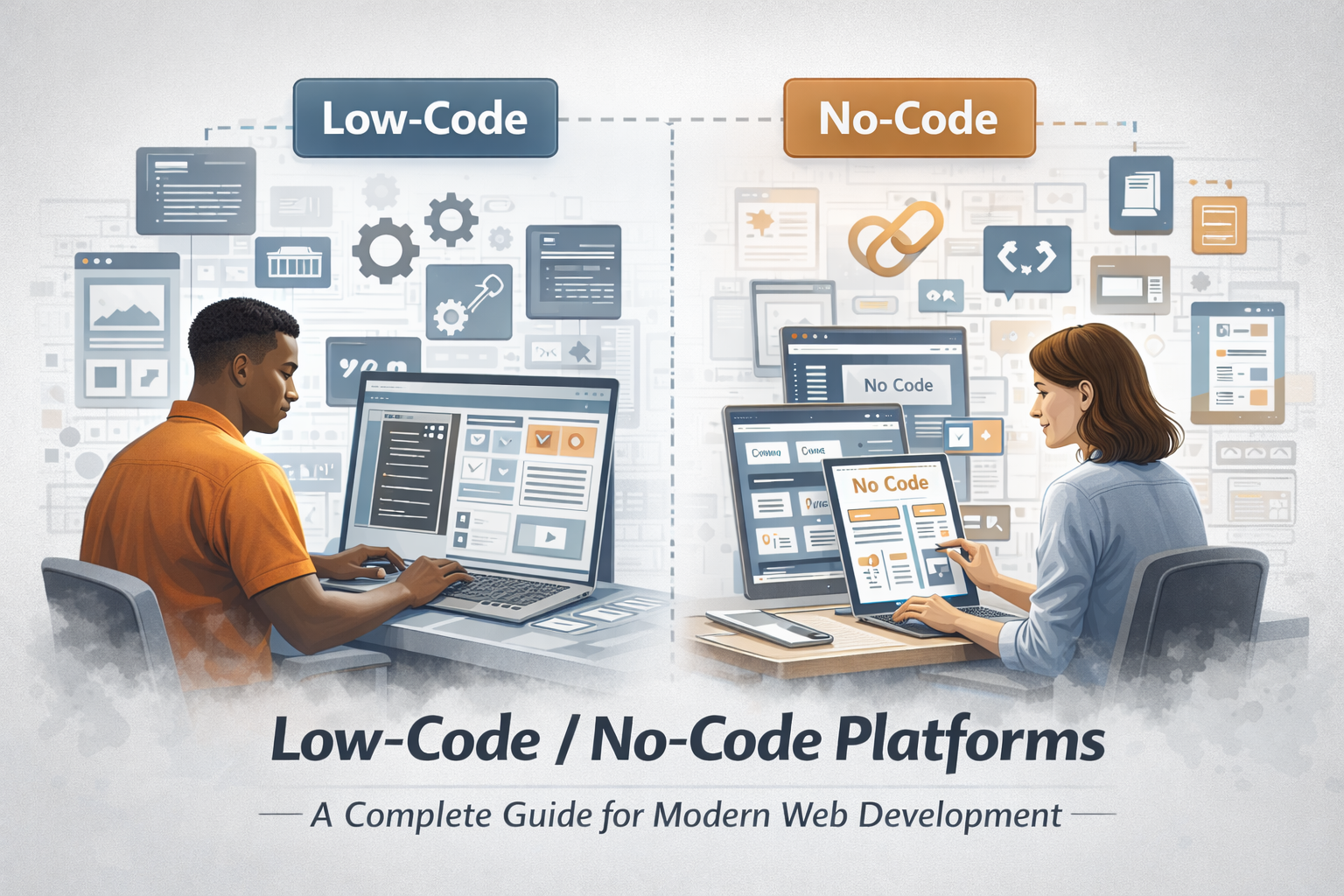
Low-code or no-code are methods of designing and developing apps using drag and drop tools that reduce or eliminate the need for traditional coding.
Why low-code is trending in 2026:
- Easy drag-and-drop builders
- Less dependency on large teams
- Faster prototyping
- Quick deployment
- Affordable for small businesses
7. Cybersecurity & DevSecOps:
Security has become more important than ever as cyberattacks have become advanced. In 2026, websites will be built with security in mind from the start, using DevSecOps practices to protect data and users at every stage of development.
Essential Security Trends:
- Zero Trust frameworks
- Multi-factor authentication
- Secure API design
- Encrypted data handling
- Real-time threat monitoring
- Automated vulnerability scanning
A website can’t be considered “modern” if it’s not secure.
8. Immersive Visuals: 3D, AR & Micro-Animations
2026’s design trends are all about immersive visuals like 3D design, augmented reality and animations that draw users’ attention and keep them hooked.
Nowadays, users love websites that are visually rich, dynamic, and immersive, as they make their online experience interactive.
Key elements of 2026 design trends:
- 3D product previews
- Animated illustrations
- AR-based try-ons
- Parallax scrolling
- Smooth micro-animations
- Interactive buttons
- Hover-based effects
9. Voice Search Optimization:
Voice assistants such as Google Assistant, Siri, and Alexa are very common now.
So, modern websites should also optimize for voice search. For this, they should emphasize conversational keywords, question-based queries and natural language patterns that reflect human speech.
Voice search optimization includes:
- Clear content structure
- FAQ-style writing
- Natural language keywords
- Schema markup
- Fast response pages
Brands that prepare now will dominate search results in the future.
10. Mobile-First & Accessibility-First Design
These days, a number of users browse the internet through their cellphones. According to a survey, this number is about 70%; therefore, the website design must also be mobile-friendly so users prefer it.
Mobile-first design focuses on:
- Fast load times
- Clean, minimal layouts
- Mobile-friendly navigation
- Optimized images
- Touch-friendly UI elements
Accessibility has also become a ranking criterion, which ensures all users, including those with disabilities, must also be able to access websites.
Accessibility includes:
- Alt text for images
- High contrast colors
- Keyboard navigation
- Screen-reader compatibility
- Clear labelling
It is a need of the hour that all businesses should give priority to the accessibility feature. All businesses should create websites that are usable, readable, and accessible for everyone.
Conclusion:
In 2026, web development has taken a huge turn, as now businesses need websites that are dynamic and smart systems. Today’s websites should notice user behavior and provide them with seamless and personalized experiences if they want user engagement and conversions.
A few features that have made to the top web development trends include the following: Usage of AI features, 3D visuals, progressive web apps (PWAs), serverless technology, and headless CMS platforms. Such brands are going to succeed that give speed, creativity, and great user experience their priority.
If you also want a website that is future-ready and high-performing, you should start implementing these trends today.
FAQs
1. What are the top web development trends in 2026?
Top web development trends in 2026 include AI-powered features, progressive web apps (PWAs), headless CMS, serverless technology, and immersive 3D visuals. Stronger website security is also a key focus. In addition to these, micro-animations, voice assistants, and mobile-first design are becoming very popular as well.
2. Why do businesses need modern website design in 2026?
Businesses need modern website design in 2026 as it improves user experience, engagement, and conversions. It further enhances SEO and brand image. Therefore, businesses should update their website design to stay ahead of competitors.
3. Which technologies will dominate web development in 2026?
A few technologies that will dominate web development in 2026 include AI/ML, WebAssembly, serverless architecture, low-code platforms, headless CMS, and AR-based interfaces.
4. How does AI improve website performance?
AI improves website performance in a several ways. It analyzes user behavior and provides them a more personalized content. It provides the facility of auto-response, boosts search results and has improved the website navigation as well.
5. Are PWAs replacing mobile apps?
Although PWAs offer a comparatively fast and more lightweight alternative, that has gained popularity among many businesses. However, they do not replace mobile apps completely.